Cake, Candles and a Corner Table: Marking a Milestone at a Sutton Inn
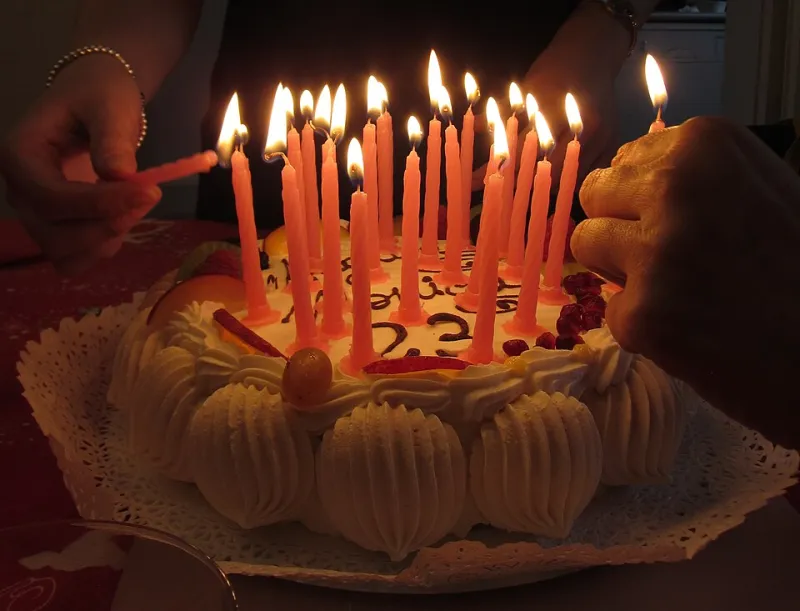
Photo: Francesca Cesa Bianchi, Milano, CC BY-SA 3.0 it, via Wikimedia Commons
Somewhere along the way, celebrating a birthday became a production. A hired room, a playlist, a minimum spend, a seating plan that nobody looks at. It is expensive, it is exhausting, and half the guests spend the evening standing in a corridor holding a glass of something warm.
A pub does the opposite. It gives you a corner, a fire if you are lucky, a menu that already works, and a landlord who has seen a thousand birthdays and knows exactly how much fuss a room can take before it stops being fun.
Here is how to do it well in Sutton.
The case against the private room
A function room separates your party from the thing that makes a pub worth being in: the noise of other people enjoying themselves. It also tends to come with a minimum spend, a deposit and a set of rules about decorations that nobody reads until the week before.
A large table in the main bar gives you atmosphere for free. Your guests can arrive at different times without it being awkward. Anyone who wants a quiet word can step away from the table. And when the evening thins out, nobody has to be told the room is needed back.
The trade-off is that you are a guest in someone else's space, which is precisely why the small touches below matter. You are borrowing the room, not taking it over.
Timing is the whole game
A few practical rules, learned the hard way by almost everyone who has ever organised one of these.
Book earlier than you eat. If supper is at seven, ask for the table from half six, and accept that a couple of people will arrive at ten past. A table held for latecomers is a table the pub cannot seat anyone else at.
Avoid the peak sitting unless you have a reason. Saturday at eight is the hardest slot to give a big group proper attention. Saturday at half twelve, or Friday at six, is easier for the kitchen and quieter for the speeches.
Tell them the number, then tell them the real number. The gap between 'about twelve' and the actual sixteen is what turns a smooth evening into a game of borrowed chairs.
Agree a finish. Not a hard ejection, just a rough time when the table will be needed back or when you plan to move to the bar. It removes the awkward hovering.
Feeding a big table without a set menu
For anything up to about eight, ordering from the normal menu is fine and usually better, because people get what they actually want.
Above that, a short set menu earns its keep. Two or three choices per course, agreed in advance, means the kitchen can send food out hot and roughly together rather than in a slow, uneven trickle. It also spares you the sight of one guest eating while seven others watch.
Ask about pre-orders. Most kitchens will want them a few days ahead for a large table, and it is worth collecting dietary requirements at the same time rather than on the night. A short, well-chosen menu is not a compromise. It is the reason the food arrives properly.
Cake logistics, honestly
Cake is where celebrations quietly fall apart. A few things worth sorting in advance.
- Ask before you bring it. Most pubs are happy for you to bring a cake; nearly all want to know beforehand so they can find fridge space and a knife.
- Deliver it earlier in the day if you can. A cake that arrives at seven and needs to be eaten at half nine is a cake sitting on a windowsill.
- Bring candles and a lighter. Pubs have both somewhere. They will not necessarily be able to find them at short notice.
- Ask about plates and cutting. This is usually free for a booked table, but it is worth confirming rather than assuming.
- Keep it simple. A single good cake beats three elaborate ones nobody finishes.
Rooms for the people who travelled
If grandparents are coming from three counties away, the kindest thing you can do is take the travel out of the equation. A room upstairs means nobody is working out the last train or drawing the short straw as designated driver.
Book early, and book the quiet rooms for the older guests. Ask about a later breakfast if the night is likely to run on. And if you are booking several rooms, ask whether there is a rate for taking more than one; it is a question that is often rewarded and never punished.
The touches that make it feel personal
Small things land harder than big ones.
A handwritten card on the table. A round of drinks ordered for the table when guests arrive, rather than a drinks tab that encourages people to order the expensive thing. One good photograph of the person being celebrated, propped somewhere sensible, rather than a slideshow. A short speech of two minutes, not ten.
And a word to the staff when you book: tell them what you are celebrating, and who the guest of honour is. Pubs are good at this. A candle in a pudding, a particular table, a note on the booking sheet, and suddenly the evening feels like it was arranged for one person rather than assembled for a group.
What to skip
The matching t-shirts. The party bags. The three-course menu that takes four hours. The elaborate table plan for fourteen people, all of whom know each other. And the assumption that more money means more occasion.
The quiet exit
The best small celebrations end without ceremony. A last drink at the bar, a few goodbyes, someone quietly settling the bill, and a walk home under a streetlight. No clearing of a room, no van to load, no deposit to argue about.
That is the whole trick: let the pub be a pub, and put your effort into the people instead of the production.